By Mrs. Eileen Hunter — about the author.
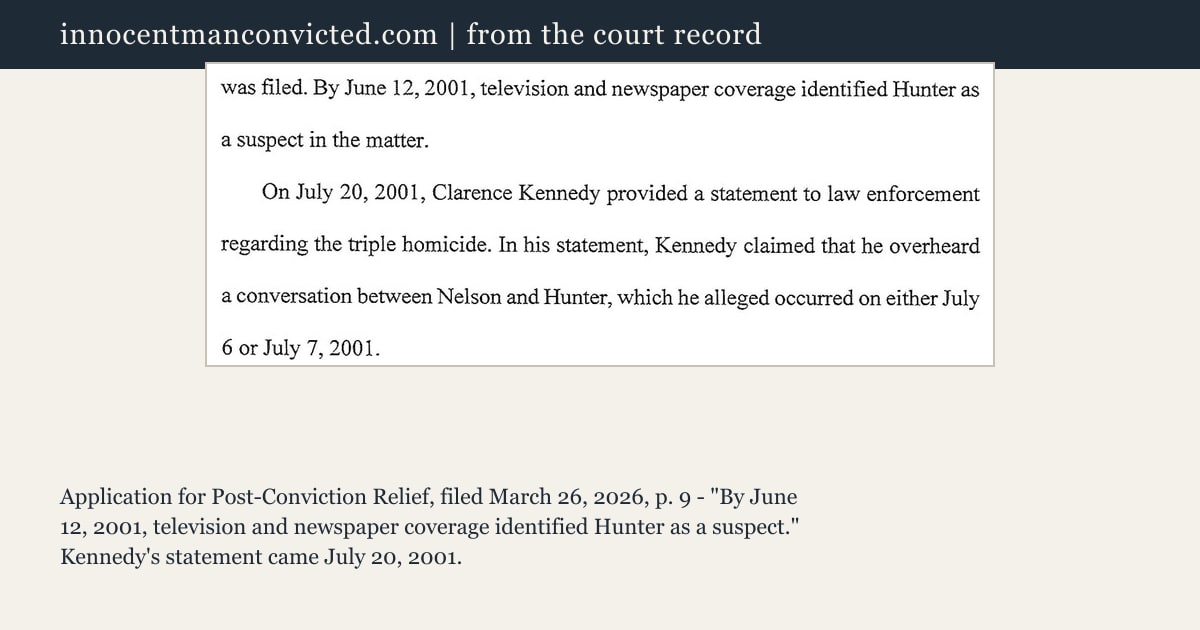
Chronology matters. June 12, 2001: KTVE airs multiple stories naming Tony Hunter — arrested in a different matter — and reporting that investigators believed he was connected to the Tanglewood triple homicide. June 20: the first implicating statement arrives (Sherry Hines, relaying an account she attributed to Glen Dale Nelson — contradicted by the crime scene, never used at trial). July 20: Vaccara Comanche. August 2: Christopher Wiggins — sought out by investigators. August 20: Clarence Kennedy. (The case timeline.)
Every statement came after the broadcast — and after cash rewards were publicized. The expert declaration filed in 2022 names this pattern precisely: “media contamination of the informants” is among the factors that “raise serious risks that the informants’ testimony was fabricated and/or false.” (Bloom Decl. ¶¶ 17–18.) The research behind that phrase: informants build “useful” testimony from media reports and each other. (¶ 12.)
The other half: sequence is not proof. The jury heard when the statements were given and convicted anyway; we report the dates because they are in the record, and readers can weigh them. (The informants page.)
Leave a Reply