By Mrs. Eileen Hunter — about the author.
An evidentiary hearing is where post-conviction claims stop being paper and start being tested: witnesses under oath, cross-examination, a judge weighing credibility. Louisiana law provides for one when an application raises questions of fact that “cannot be resolved on the face of the pleadings.” La. C.Cr.P. art. 930. The Louisiana Supreme Court has vacated summary denials for exactly this reason. (State v. Tyson, 267 So. 3d 584 (La. 2019).)
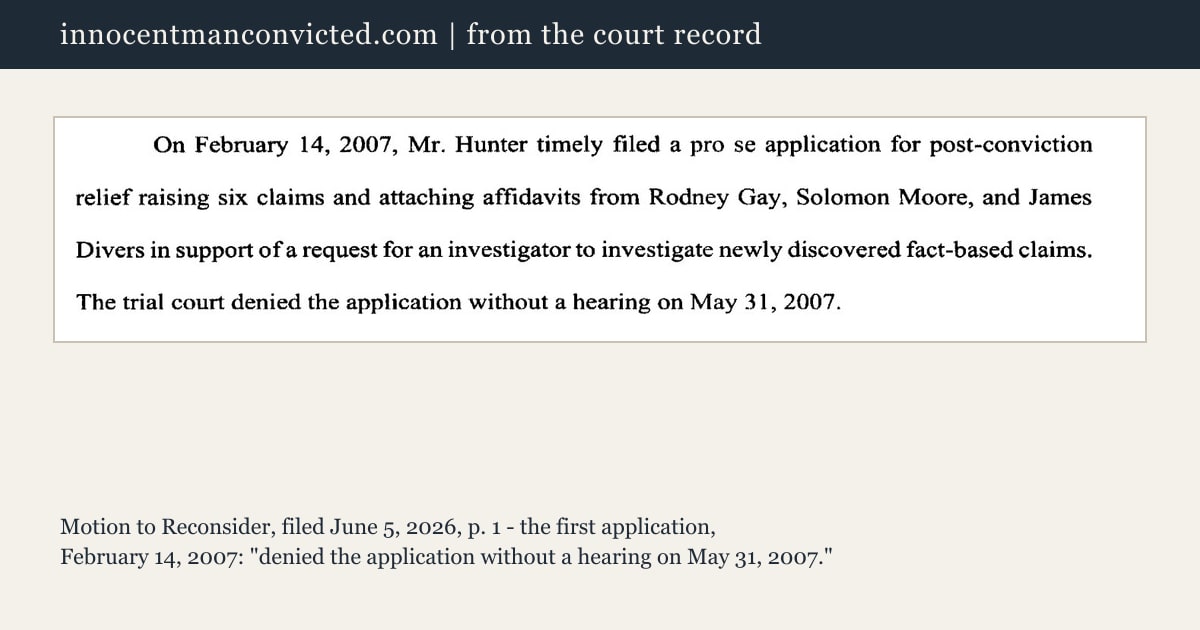
Here is the striking fact about State v. Hunter: across five post-conviction applications spanning 2007 to 2026 — presenting sworn recantations, an expert declaration, window-acoustics affidavits, an undisclosed alibi statement, and sentencing records obtained in 2025 — not one has ever received an evidentiary hearing. Every denial has been on the papers. (The timeline; procedural history.)
The other half: courts may lawfully deny meritless applications without hearings, and each denial rested on stated grounds. The pending writ argues those grounds were wrong — that material facts are genuinely disputed and Article 930 requires the hearing. That question is now before the Second Circuit. (The writ, transcribed.)
Leave a Reply