By Mrs. Eileen Hunter — about the author.
221 Greenwood Drive was, in Captain Harris’s bond-hearing words, “a major supplier of marijuana in that area.” Investigators found a safe, digital scales, and a bag of marijuana behind a bathroom wall; a former resident described pounds of drugs and cash moving through the house; Levi Williams had received a 20-to-25-pound shipment about a week before the murders. (R. 177, 1435, 2022; 2022 application.)
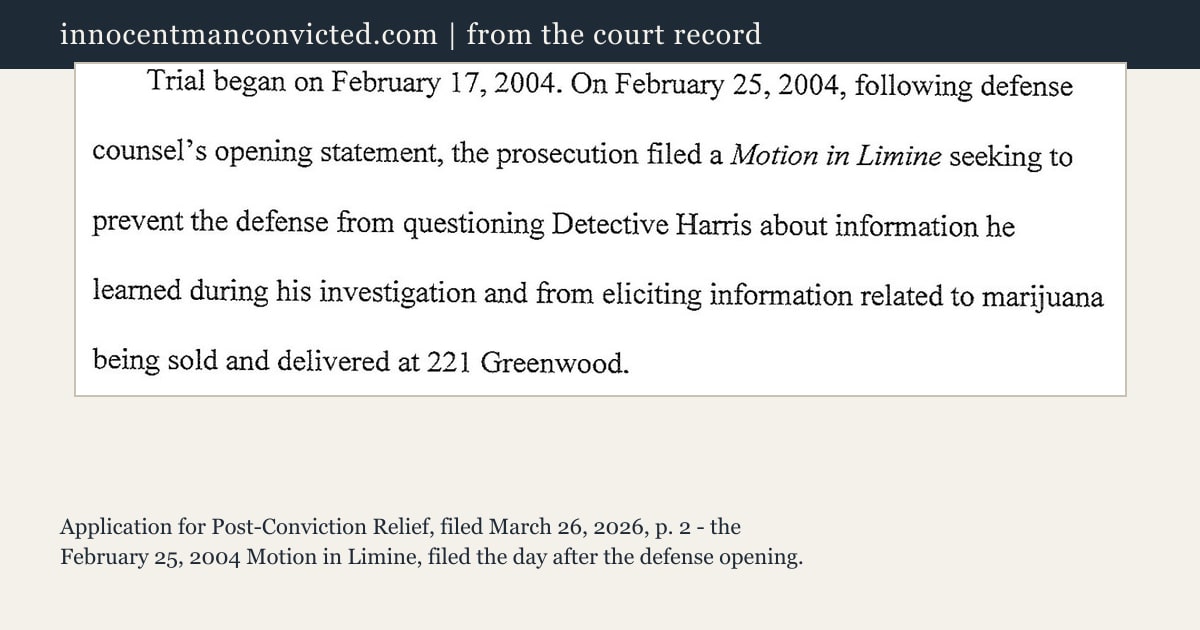
On February 25, 2004 — the day after defense counsel’s opening statement — the prosecution filed a Motion in Limine to prevent the defense from questioning Detective Harris about information he learned during his investigation and from eliciting information related to marijuana being sold and delivered at 221 Greenwood. (2026 application, procedural history.) The obvious alternative theory — a drug robbery by someone who, as resident Harold Black put it, “had to be somebody that knew us” — became harder to put before the jury.
The other half: motions in limine are ordinary trial practice, courts routinely limit investigation hearsay, and the record before us does not show the full ruling’s scope. We report the motion’s existence and timing from the filed record, and note the question it raises for a jury that never heard the household’s full story.
Leave a Reply