By Mrs. Eileen Hunter — about the author.
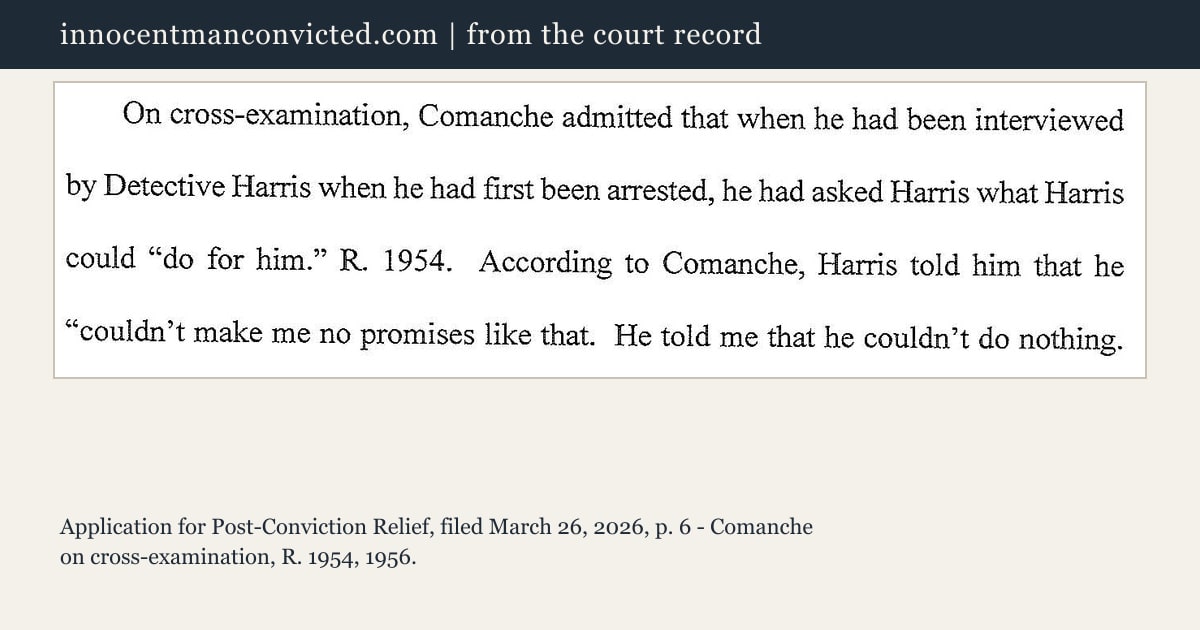
On cross-examination, Vaccara Comanche admitted that when Detective Harris first interviewed him after his arrest, he asked Harris what Harris could “do for him.” R. 1954. According to Comanche, Harris “couldn’t make me no promises like that. He told me that he couldn’t do nothing. Only thing he could do is talk to somebody but he can’t do nothing for me.” R. 1956. (Application for Post-Conviction Relief, March 26, 2026, Statement of Facts.) (Full transcription.)
On direct, Comanche had testified that he and the prosecutor spoke about two weeks before trial and that he “had not been promised anything in exchange for his testimony.” ROA. 1946. Detective Medaries testified that on July 20, 2001 investigators took two recorded statements from Comanche — one about Greenwood Drive, and “another recorded statement from him about information he was going to provide us in an unrelated case that we were working.” R. 1989. (The Comanche file · the three informants.)
The 2026 application alleges that a habitual-offender bill filed against Comanche on April 15, 2002 — dismissed on November 25, 2002, thirty-nine days after Mr. Hunter’s indictment, according to the clerk’s minutes (the 39 days) — was never used against him, and that this was not disclosed to the defense. (Application of March 26, 2026, Timeliness; Motion to Supplement, April 20, 2026.)
The other half: asking what an officer can do is not a promise, and Comanche’s own account of Harris’s answer was that there was none. The jury heard the exchange and convicted. Whether an undisclosed benefit followed is the claim now pending before the Second Circuit; no court has ruled on it. (The disclosure claims.)
Leave a Reply