Category: Case Updates
-
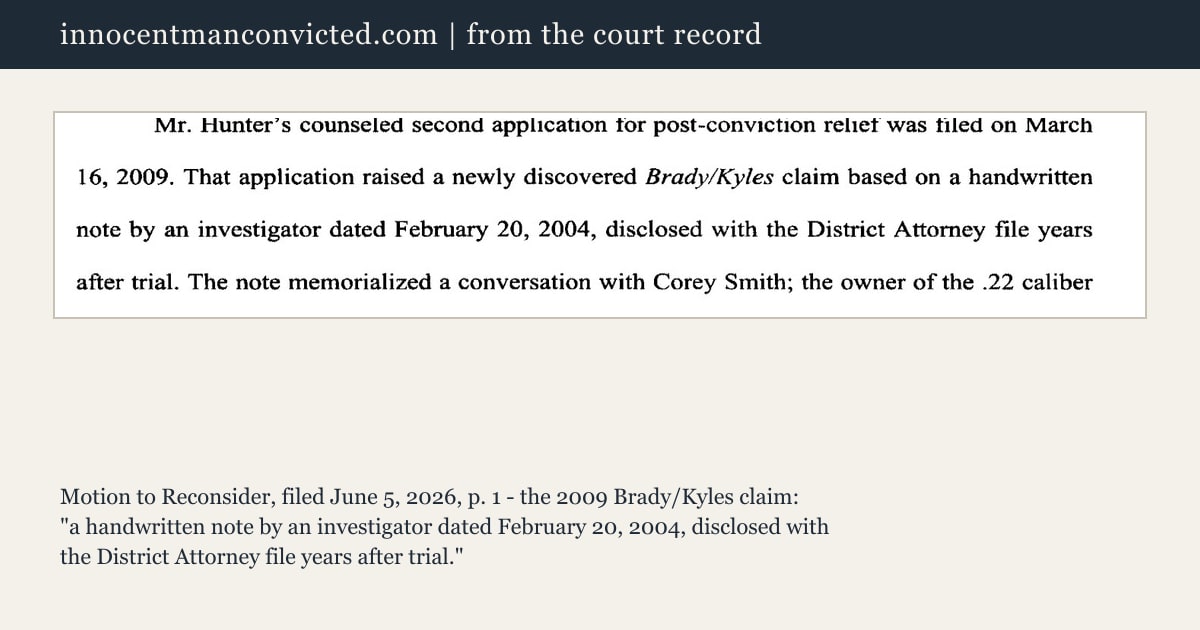
A Note Dated During the Trial, Disclosed Four Years Later
A note dated during the 2004 trial reached the defense in 2008. The claim built on it was denied without a hearing; no federal court has reviewed it.
-

What Hurricane Carter’s Case Teaches About This One
By Mrs. Eileen Hunter — about the author. Rubin “Hurricane” Carter was convicted of a New Jersey triple murder — twice — on the word of witnesses with criminal exposure and shifting stories, while material bearing on their credibility went undisclosed. His convictions survived years of appeals before a federal judge found the prosecution had…
-
The Alibi the Jury Never Heard
By Mrs. Eileen Hunter — about the author. Where was Tony Hunter on March 10, 2001? According to the sworn alibi evidence filed in his 2022 application: at a birthday party on South 1st Street with his 11-year-old daughter Porcia until about 7:30 p.m. — confirmed to investigators by the host, Brenda Graves, in May…
-
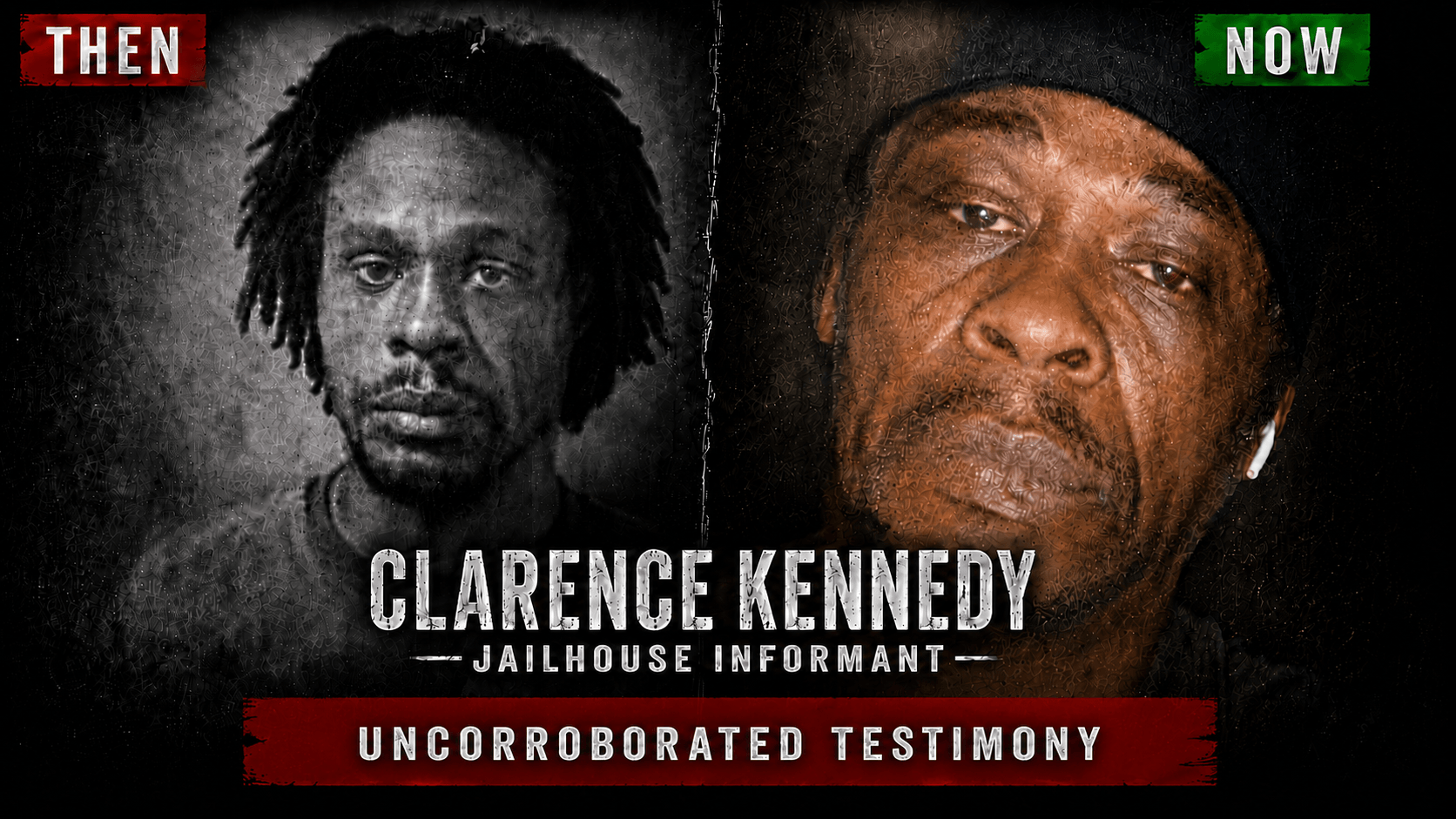
The Sentence the Statute Forbids: 25 Years With 20 Suspended
By Mrs. Eileen Hunter — about the author. Louisiana Revised Statute 14:64.1 says whoever commits first-degree robbery shall be imprisoned “without benefit of parole, probation or suspension of imposition or execution of sentence.” In February 2002, jailhouse informant Clarence Kennedy pled to a reduced charge of first-degree robbery and received 25 years — with 20…
-
What “Exculpatory Evidence” Means — and Why It Decides Cases
By Mrs. Eileen Hunter — about the author. Exculpatory evidence is anything favorable to the accused — evidence tending to show innocence, undercut the State’s witnesses, or reduce punishment. Since Brady v. Maryland (1963), prosecutors must disclose it when material, “irrespective of the good faith or bad faith of the prosecution.” It comes in two…
-
“He Didn’t Confess That… That’s a Lie”: The 2026 Nelson Interview
By Mrs. Eileen Hunter — about the author. Every alleged jailhouse confession in this case runs through one man: Glen Dale Nelson, the inmate to whom Tony Hunter supposedly confessed through a Pod 10 window. In February 2026, attorneys reached Nelson by phone. The certified transcript is now public in full. What he said, in…
-

The Gun Nobody Could Trace to Him
By Mrs. Eileen Hunter — about the author. The murder weapon in the Greenwood Drive killings was a .22 caliber semi-automatic, recovered by Monroe police on March 17, 2001 — a week after the homicides — from a median off Highway 165. Its serial number traced to Randall Smith, who had given it to his…
-
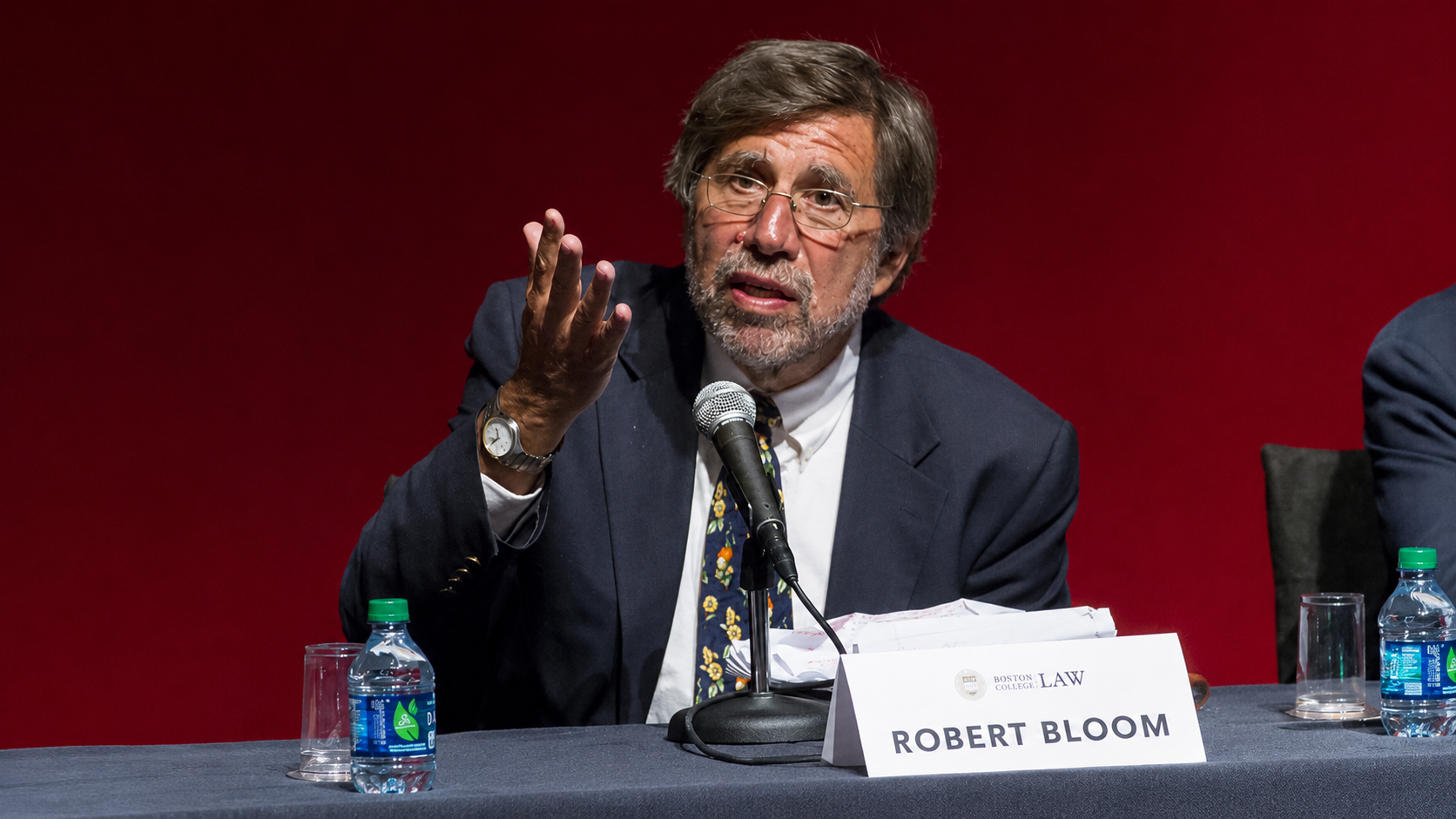
Jailhouse Informants: Why Experts Keep Warning About Them
By Mrs. Eileen Hunter — about the author. The Innocence Project found jailhouse informants played a role in nearly one in five of the DNA-based exonerations. A 2004 Northwestern study put informant testimony in 45.9% of wrongful capital convictions. The reasons are structural: informants testify for benefits that usually arrive after testimony — letting them…
-
Levi, Jeremy, and Chavez: The Victims This Case Is About
By Mrs. Eileen Hunter — about the author. Three people died at 221 Greenwood Drive on March 10, 2001. Levi “Chico” Williams was 24. Jeremy Staten and Chavez Staten were eleven years old — boys who considered Anthony Rodgers their godfather, sleeping over at a house they knew well. Henry Staten, sixteen, opened the door…
-
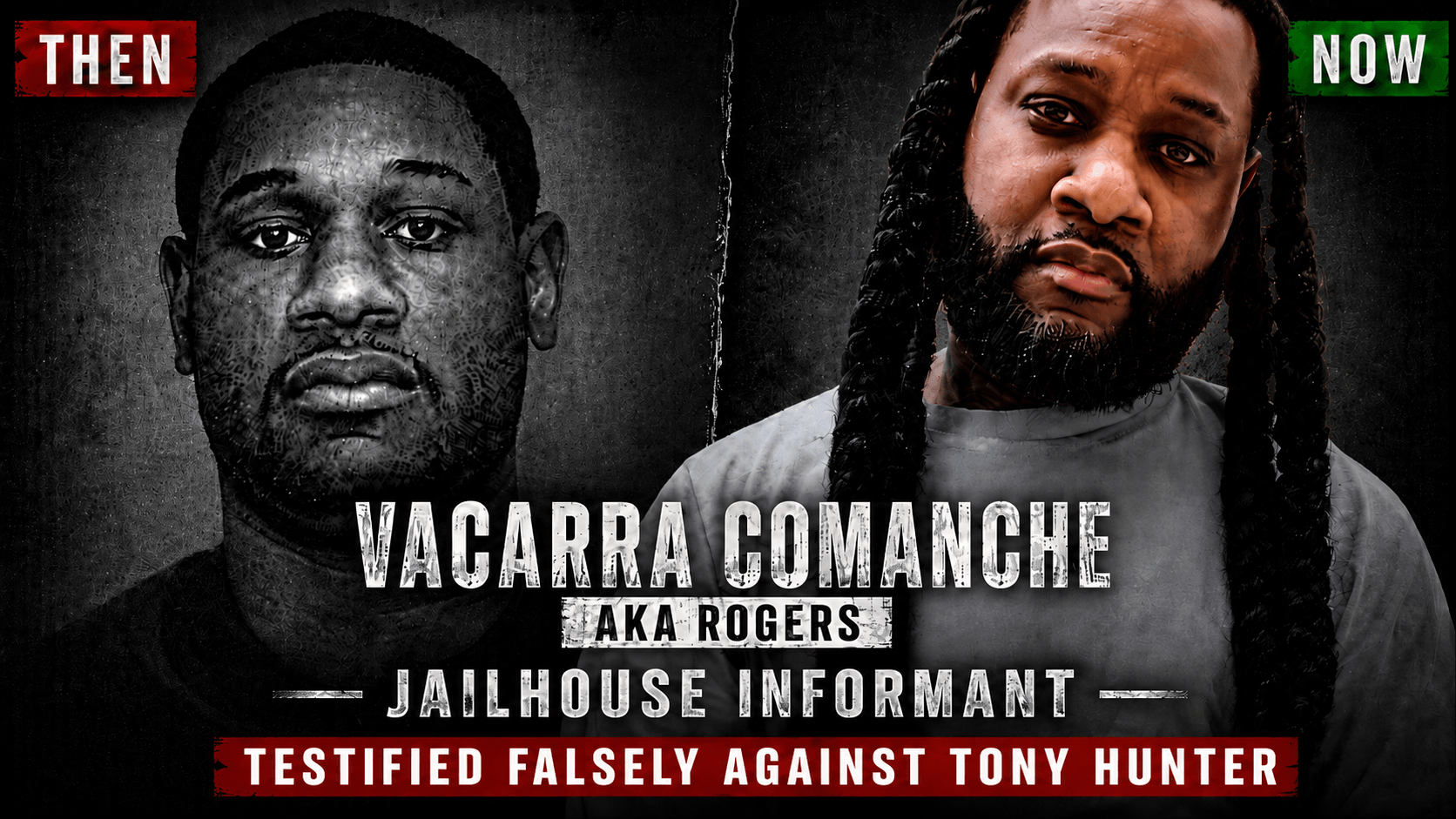
The 39 Days: A Habitual-Offender Bill, an Indictment, and a Dismissal
By Mrs. Eileen Hunter — about the author. Three dates from the clerk’s minutes of Vaccara Comanche’s cases — records obtained by counsel only in March 2025. April 15, 2002: a habitual-offender bill is filed against Comanche, carrying potential life exposure. October 17, 2002: Tony Hunter is indicted — largely on the strength of Comanche’s…