By Mrs. Eileen Hunter — about the author.
In Napue v. Illinois, 360 U.S. 264 (1959), the Supreme Court held that a conviction obtained through testimony the State knows to be false must fall if the testimony could reasonably have affected the verdict — and that the State may not stay silent “when false evidence appears,” even if it never solicited the lie. The rule covers credibility testimony too: a witness’s false “I was promised nothing” counts. (The full explainer.)
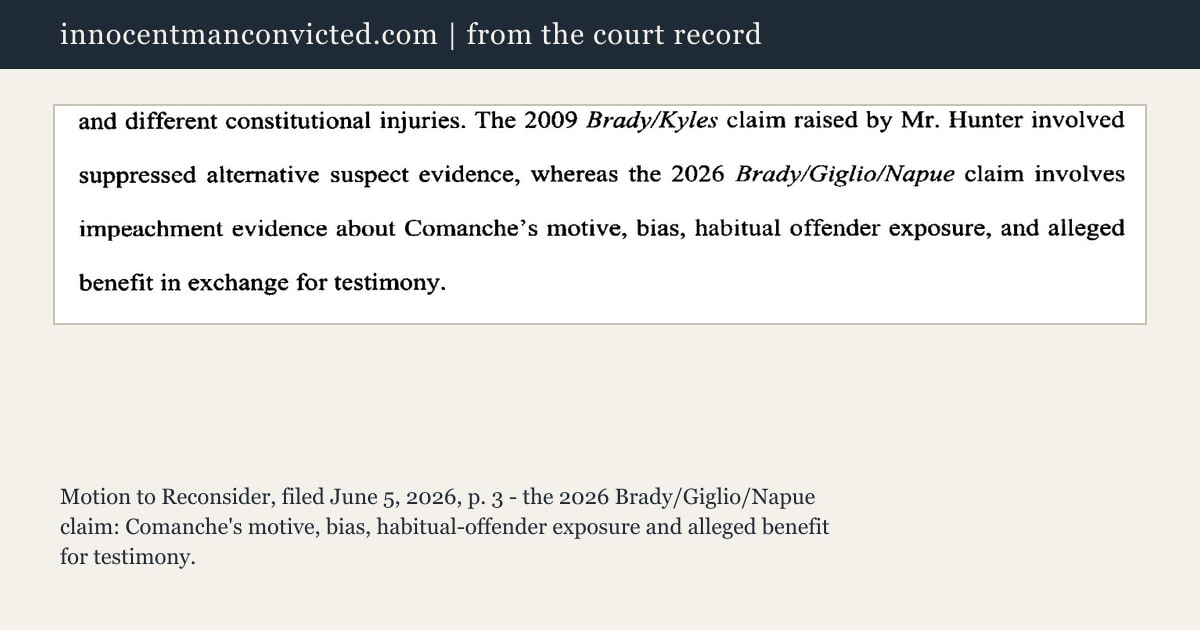
The application in State v. Hunter: all three informants told the jury they had been promised nothing and received nothing. Against that stand the records — Kennedy’s statutorily forbidden suspended sentence and dismissed charge presented as a conviction; Comanche’s habitual-offender bill dismissed after the indictment; Wiggins never multi-billed despite life exposure. The filings argue the State allowed those denials to stand uncorrected. (The disclosure claims.)
The other half: a Napue claim requires proof the testimony was actually false, that the State knew, and that it mattered — three elements no court has yet adjudicated here. The claim is pending. (The writ.)
Leave a Reply